
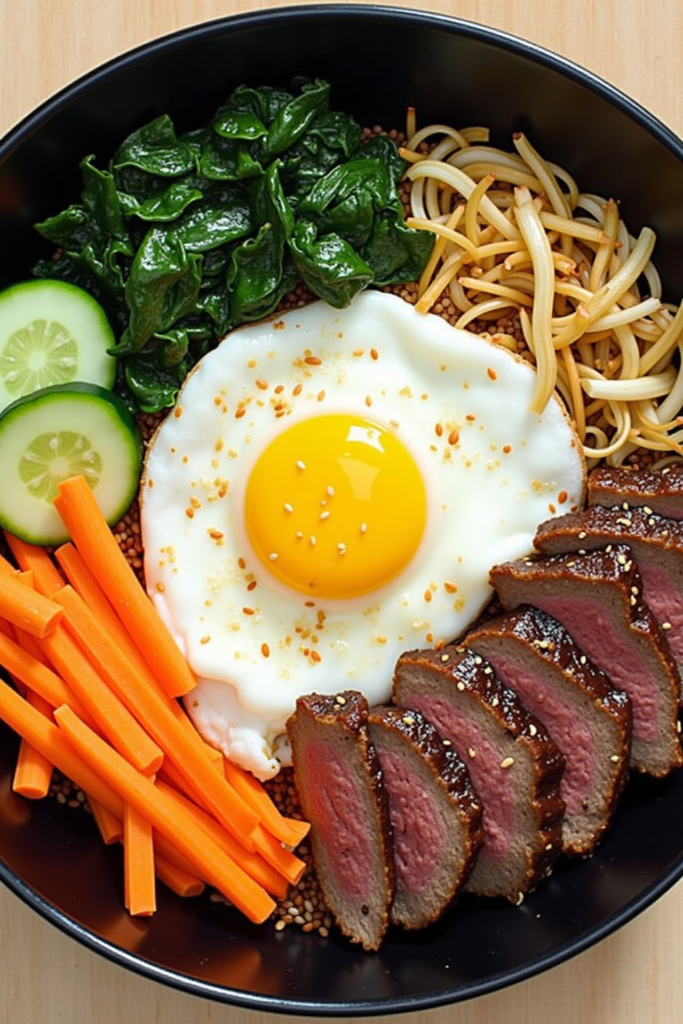
Easy Korean Bibimbap
Introduction
When you want a meal that is as flavorful as it is visually striking, Easy Korean Bibimbap stands out as the perfect choice. Bibimbap is a vibrant Korean rice bowl topped with a rainbow of sautéed vegetables, savory marinated beef (or your protein of choice), and a luscious fried egg—finished off with a punchy gochujang sauce. This dish turns simple pantry staples and fresh produce into an eye-catching, delicious, and deeply satisfying dinner that’s both healthy and customizable for everyone at the table.
Deliciously Unique Easy Korean Bibimbap
Bibimbap isn’t just about flavor—it’s a total meal in one bowl, with a balance of carbohydrates, protein, veggies, and healthy fats. Each ingredient is prepared individually for maximum texture and taste, then artfully arranged atop steamed rice. The interactive nature—mixing it all together with spicy-sweet gochujang—makes it a fun, engaging dining experience and a guaranteed crowd pleaser.
Building the Perfect Bibimbap Bowl
Start with hot, fluffy rice as your base—short grain white rice works best, but brown rice or cauliflower rice offer great alternatives. Prepare quick-marinated beef, chicken, tofu, or mushrooms for your protein. Sauté colorful veggies like spinach, carrots, zucchini, and bean sprouts in sesame oil. Don’t forget a crispy fried egg to crown each bowl, and serve with a generous dollop of gochujang sauce for that signature kick.
Assembling Your Easy Korean Bibimbap
To create each bowl, layer the rice, then artfully arrange vegetables and protein in clusters. Top with the fried egg, sprinkle with sesame seeds, and add sliced green onions. The final flourish—a swirl of gochujang sauce, which each diner tosses into their bowl right before eating. The beauty of bibimbap is its flexibility: use whatever fresh veggies and proteins you have, making it a smart way to clean out your fridge and prevent waste.
Serving Suggestions for a Show Stopping Bibimbap
Serve your bibimbap with kimchi on the side for brightness and crunch, plus extra gochujang for those who like more heat. A bowl of miso soup or quick-pickled cucumbers makes the meal even more complete. The array of colors and flavors means it fits well for both a casual weeknight family dinner and a special occasion meal.
Nutritional Information and Serving Size
This recipe makes 4 generous bowls of bibimbap. Each serving typically contains about 400-500 calories, depending on your protein and extra toppings. The balance of macros and micronutrients makes it a filling, health-conscious option that doesn’t compromise on taste.
Easy Korean Bibimbap (Recap)
Easy Korean Bibimbap is a beautiful, balanced bowl that combines everything you need for a nutritious meal. Thanks to its endless substitution possibilities and flavor-packed sauce, it’s sure to become a regular addition to your dinner rotation.
Ingredients
💡Meal Planning Tip: Save this recipe to automatically generate a smart shopping list with all ingredients sorted by store section—perfect for streamlining your next grocery trip and making meal planning hassle-free.

Instructions
- Cook the rice according to package instructions; keep hot.
- If using beef or another protein, marinate with soy sauce, sugar, and a splash of sesame oil for at least 10 minutes.
- Sauté veggies individually:
- Cook zucchini and carrots in a little vegetable oil, seasoning with a pinch of salt, about 2-3 minutes each.
- Sauté spinach with a dash of sesame oil until just wilted; set aside.
- Quickly blanch bean sprouts in boiling water for 1 minute, then chill under cold water, drain, and toss with a sprinkle of salt.
- Stir-fry your marinated protein until just cooked through; remove from heat.
- Fry eggs sunny-side up so the yolk remains runny (for that classic bibimbap sauce when mixed in).
- To assemble: Divide rice among 4 bowls. Arrange veggies and protein in sections over rice. Place fried egg in the center of each bowl.
- Top with green onions and sesame seeds. Add a dollop of gochujang and serve with kimchi and more sauce on the side.
Weekly Meal Planning
Easy Korean Bibimbap is ideal for meal prep: you can make the rice and sautéed toppings ahead of time, and simply fry fresh eggs when ready to serve. Save and schedule this recipe to organize your week’s meals, ensuring you have all the necessary ingredients in your smart shopping list.
Planning Benefits:
- Automatically calculates total ingredients when planning multiple meals
- Groups shopping needs by store section for super-speedy trips
- Prevents purchasing duplicates and minimizes forgotten items
- Makes weekly cooking more efficient, stress-free, and cost-effective
Pro tip: Planning a week of balanced meals? Schedule your recipes and let CookifyAI total up your produce, proteins, and pantry needs—making it easy to shop for multiple recipes and cut down on food waste.
Cook and Prep Times
Prep Time: 25 minutes
Cook Time: 20 minutes
Total Time: 45 minutes